Christopher Wren's London churches number more than 50 historic structures rebuilt after the Great Fire of 1666, with St Paul's Cathedral as the most famous centrepiece. This guide covers the best Christopher Wren churches to visit in London, offering a strategic driving route through the City that highlights the unique baroque architecture and steeples that define the capital's skyline.
Navigating the dense, winding streets of the City of London to witness the genius of Sir Christopher Wren can feel like an exercise in frustration. The sheer density of traffic and the difficulty of locating these seventeenth-century masterpieces tucked behind modern glass towers frequently leaves visitors exhausted rather than inspired. In this guide, we explore the best Christopher Wren churches to visit in London — from the iconic dome of St Paul's Cathedral to the hidden treasure of St Stephen Walbrook. You'll discover the story behind the 'wedding cake' spire of St Bride's and get practical tips for planning an efficient route that honours Wren's legacy without the stress of navigating the urban maze on foot.
The Phoenix from the Ashes: Why Christopher Wren Defined the London Skyline
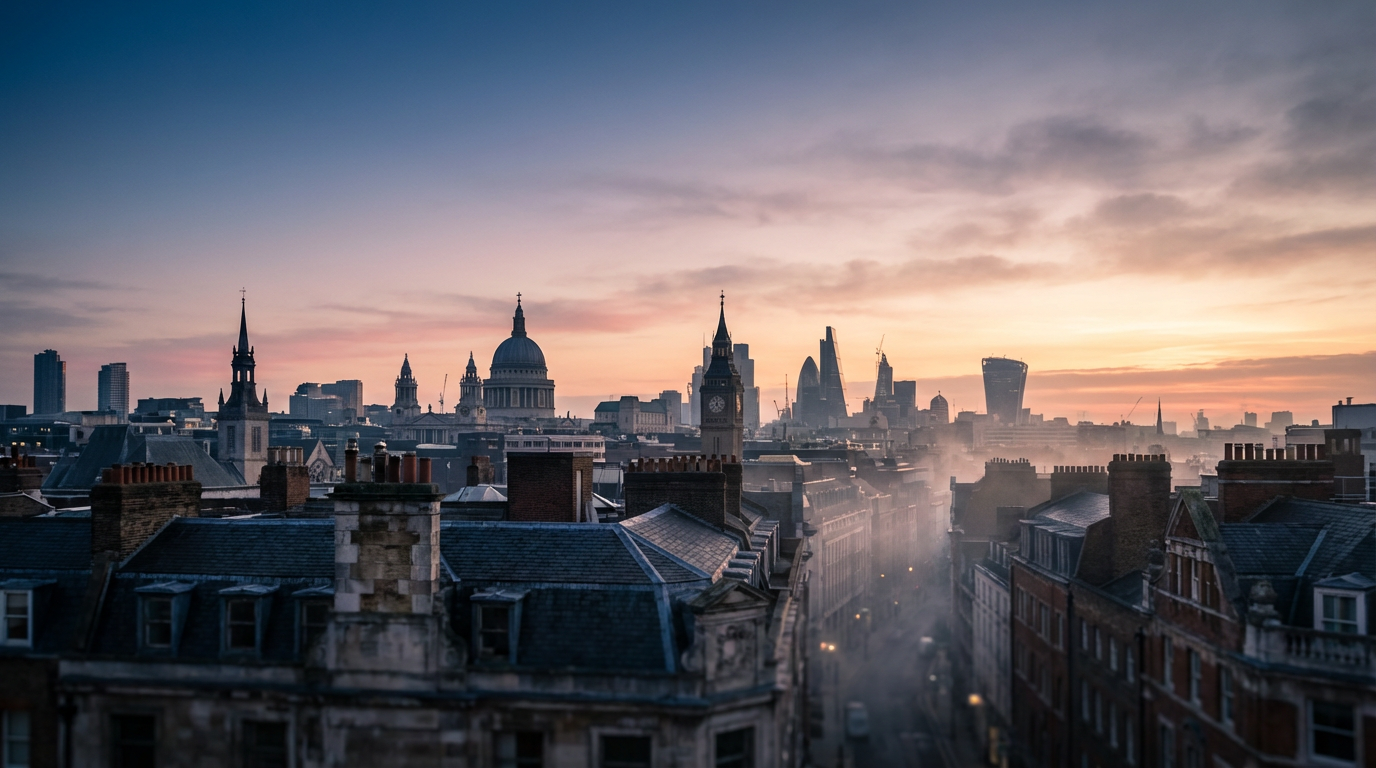
The landscape of modern London was forged in the heat of September 1666. The Great Fire decimated the city, consuming over 13,000 houses and 87 parish churches, effectively ending the era of the medieval timber settlement. From these embers, Christopher Wren, serving as Surveyor of the King’s Works, was tasked with a monumental reconstruction. He was commissioned to rebuild 51 city churches, a project that replaced charred oak with enduring Portland stone and introduced the sophisticated geometry of Baroque architecture to the capital.
From the driver's seat of a black cab, the legacy of these Wren churches is intensely practical. Long before GPS, London's cabbies relied on Wren's distinct steeples to orient themselves within the narrow, winding lanes of the Square Mile. Even today, while we conduct our history tours, these spires serve as vital navigational landmarks. Each steeple was designed to be unique — Wren ensured that a quick glance down a side street would tell a Londoner exactly where they stood.
Navigating the City: Why a Private Black Cab is the Best Way to See Wren Churches
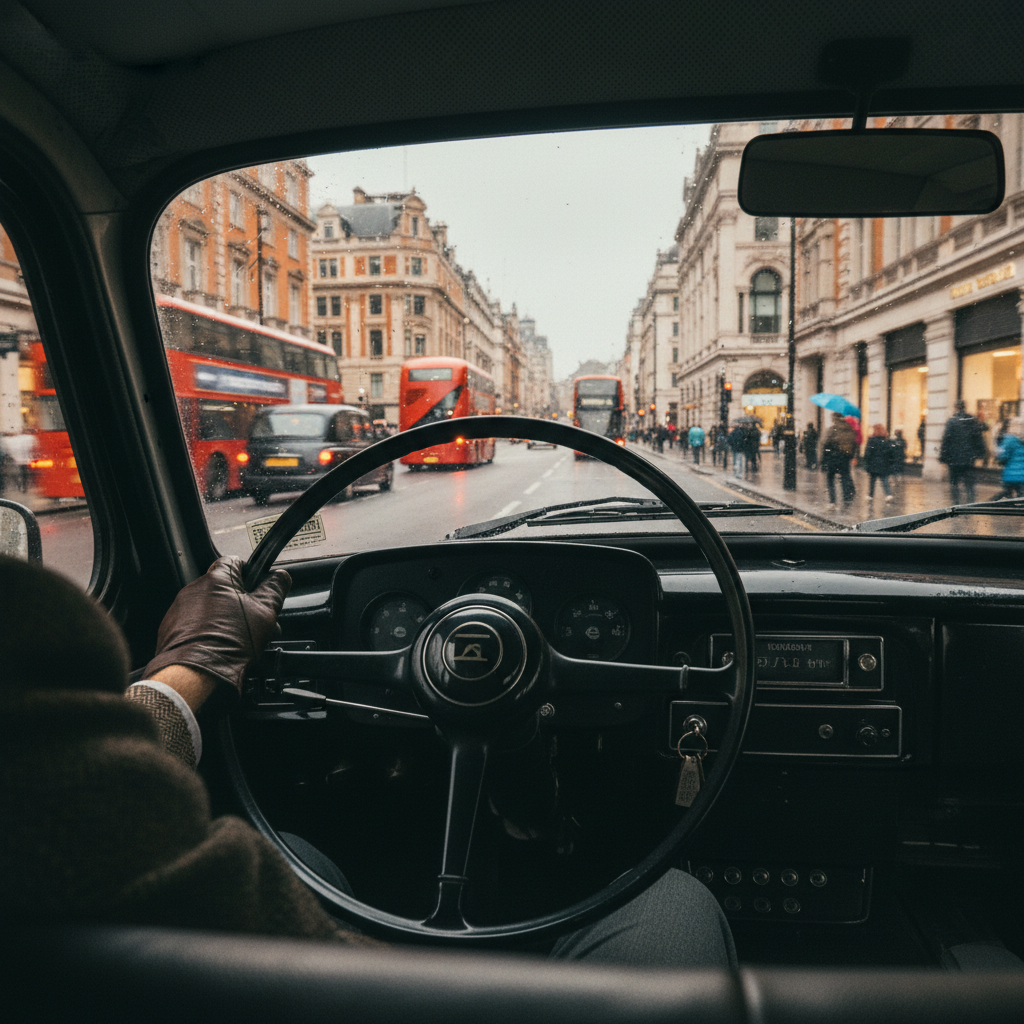
While the spires of these Wren churches provide a clear visual map, reaching them on foot or via public transport is another matter entirely. The Square Mile remains a labyrinth of narrow, winding lanes and medieval shortcuts that often confuse even seasoned visitors. Navigating the City by Tube requires climbing countless stairs and waiting on crowded platforms, only to emerge several blocks from your actual destination. A private black cab eliminates this physical toll, offering a seamless door-to-door experience that is particularly valuable if you are arriving on an early morning flight.
Our airport pickups with guided tours solve the common logistical problem of the dead hours between landing at Heathrow and your hotel check-in time. Instead of dragging luggage through turnstiles or across cobblestones, your bags stay securely in the boot while we navigate directly to the entrance of each site. Many of Wren's masterpieces are tucked away in quiet courtyards or behind modern office blocks where the average tourist might easily walk past them.
By choosing a black cab for your tour of the best Christopher Wren churches to visit in London, you can efficiently see four or five significant sites in a single morning. This pace is nearly impossible on foot without significant fatigue. A professional driver knows the specific kerbside spots where a quick drop-off puts you exactly where you need to be, so you can explore without the stress of navigating the City's complex traffic.
St Paul's Cathedral: The Crown Jewel of the City
No architectural journey through the capital is complete without visiting St Paul's Cathedral. Completed in 1710, it represents the pinnacle of Wren's career and his most complex engineering feat. The cathedral features a sophisticated triple dome structure — an inner dome for balanced interior scale, a hidden middle brick cone for structural support of the heavy stone lantern, and an outer lead-covered dome that creates the iconic silhouette visible for miles. Inside, the Whispering Gallery offers a unique acoustic experience, where a quiet word against the wall travels clearly to the opposite side of the vast space.
While most visitors congregate at the West Front, a driver's expertise reveals superior perspectives for photography that avoid the crowds. The descent down Fleet Street offers a classic framed view of the dome between the street's traditional buildings, while the contemporary glass facades of Paternoster Square provide a striking reflection of the Baroque masonry. St Paul's also stands as a symbol of local resilience; it famously survived the Blitz while the surrounding area was levelled by incendiary bombs — a poignant reminder of the city's enduring spirit.
St Stephen Walbrook: The Prototype for the Great Dome
If St Paul's is the crown jewel, St Stephen Walbrook is the laboratory where the brilliance of Wren's work was perfected. From the street, the church appears modest and even plain, tucked quietly behind the Mansion House. However, we always encourage guests on our history tours to step inside, as the interior is widely considered Wren's finest work.
The centrepiece is the magnificent dome, which served as a crucial structural and aesthetic prototype for the grand dome of St Paul's. As the first dome of its kind in England, its airy, light-filled geometry demonstrates Wren's transition from mathematician to architectural master. In the centre of the nave sits a massive circular altar carved from Travertine marble by Henry Moore, installed in 1987 — a striking stylistic contrast to the intricate Baroque plasterwork.
St Bride's Fleet Street: The Inspiration for the Wedding Cake
Continuing down Fleet Street, the spire of St Bride's immediately commands attention. Standing as the tallest of Wren's City churches apart from St Paul's, its distinctive silhouette holds a charming place in culinary history. In 1703, a local pastry cook named Thomas Rich sought inspiration for his own wedding cake; looking up at Wren's elegant, five-tiered steeple, he replicated its diminishing layers in icing. This single act of creativity established the design for the traditional tiered wedding cake used globally today.
Historically known as the 'Journalists' Church', St Bride's has long served the spiritual needs of the printing and publishing trade that once dominated this corner of the City. During our tours, we often lead guests beneath the floor to the vaulted crypts. These chambers contain significant Roman remains and medieval foundations, offering a physical timeline of the capital's occupation and a quiet, contemplative contrast to the busy streets above.
St Clement Danes: The Oranges and Lemons Church
Moving westward from the printer's hub of Fleet Street, the road splits to accommodate St Clement Danes, which occupies a unique island site in the middle of the Strand. Its position makes it one of the most recognisable of Wren's City churches, serving as a physical gateway between the financial City and the regal West End. This church is the spiritual home of the Royal Air Force; inside, the floor is embedded with over 800 slate crests of RAF squadrons, and the statues of Air Chief Marshals Dowding and Harris stand prominently outside.
This is a strategic highlight of our history tours. Because it sits directly on the main arterial route, we can pause here to hear the bells play the famous 'Oranges and Lemons' nursery rhyme tune without deviating from the path toward Westminster. It offers a seamless transition from the dense history of the City into the wider avenues of the West End, giving a clear sense of how the capital's distinct districts connect.
Lesser-Known Masterpieces: St Mary-le-Bow and St Magnus the Martyr
For travellers seeking a deeper connection to local identity, St Mary-le-Bow on Cheapside is essential. It is famously home to the Bow Bells; tradition dictates that a true Cockney must be born within the sound of their chime. While the church was heavily restored after wartime damage, the interior retains the grace typical of Wren's City churches. Its presence on Cheapside, once the city's main market street, makes it a logical stop on our history tours when moving between St Paul's and the Bank junction.
Further south, tucked away near the Thames, stands St Magnus the Martyr. This church offers a profound sense of physical history. Before the bridge was moved upstream in the 1830s, the main entrance to the old London Bridge sat directly in front of the church's porch — pedestrians would walk through the base of the tower to cross the river. Inside, visitors can see a piece of Roman timber dating from around AD 75, discovered during nearby excavations. These stops offer a quiet look at the city's ancient foundations before the bustle of modern London takes over.
Practical Tips: Planning Your Christopher Wren Church Tour

To make the most of your visit to the best Christopher Wren churches in London, timing is essential. The Square Mile runs on a corporate rhythm, so many of these historic sites close on Saturdays and Sundays. Plan your visit for a Tuesday, Wednesday, or Thursday to ensure full access, and aim for mid-morning between 10:00 AM and 12:00 PM — outside both rush hour and midday services, when photography and sightseeing can be restricted.
Integrating these sites into your arrival schedule is a highly efficient way to manage your time. We frequently arrange airport pickups with guided tours for guests arriving from Heathrow or Gatwick. Instead of waiting in a hotel lobby for an afternoon check-in, you can spend those hours exploring the architecture of London's Wren churches, with your luggage secure in the boot while you step inside the vaults and naves.
Accessibility is a priority on every one of our black cab tours. Every cab in our fleet is fully wheelchair accessible, with integrated ramps and spacious interiors, so London's history stays open to everyone. To book a private Wren churches tour or combine these sites with your airport transfer, call or email Martin directly — no forms, no deposits, just a personal conversation to plan your perfect route.