A Roman and medieval London history tour by black cab provides a private, expertly guided exploration of the city's ancient origins and historical landmarks. Travelers can visit iconic sites such as the Roman Wall, the Tower of London, and hidden ruins like the London Amphitheatre from the comfort of a traditional taxi. This specialized tour connects nearly 2,000 years of history, offering deep insights into the architectural evolution of the City of London.
Navigating London’s modern skyline often feels like a race against time, yet the city’s most profound stories lie buried beneath layers of asphalt and glass. For many visitors, the struggle is not just finding the ancient ruins of Londinium, but doing so without the fatigue of walking tours or the confusion of public transport. Understanding these foundations is essential; they dictated the city's growth and defensive boundaries for two millennia. In this guide, we trace the remnants of the London Wall and the locations of the seven medieval gates. You will discover how the city transformed after the Romans departed and explore the Norman churches that survived the Great Fire of 1666. Finally, we explain why a private black cab offers the most practical and sophisticated way to uncover these hidden historical treasures from the comfort of a British icon.
From Londinium to the Middle Ages: London's Hidden Foundations
The City of London, often referred to as the Square Mile, presents a striking visual paradox. Gleaming glass skyscrapers like the Leadenhall Building cast long shadows over 2,000 year old ruins that lie just beneath the pavement. This juxtaposition is at the heart of any London History Tour, where the ancient past is never truly buried, only built upon.
Choosing a Roman and medieval London history tour by black cab offers a distinct advantage over traditional walking routes. While many visitors attempt the 'Wall Walk' on foot, the disparate locations of key sites can make for a grueling and time-consuming experience. A black cab serves as a comfortable time machine, allowing you to move seamlessly between the subterranean Billingsgate Bath House, the sunken Guildhall Amphitheatre, and the formidable stone ramparts of the Tower of London in a single afternoon.
The experience is heightened by the unique geometry of the City itself. Many of the arterial roads we navigate today still follow the original Roman layouts established nearly two millennia ago. Your driver-guide understands the subtle shifts in this urban landscape, knowing exactly where the Roman town ended and the medieval city began. By utilizing a black cab, you can explore the full breadth of the City’s foundations without the physical fatigue of a 4km trek. We navigate the narrow lanes and busy junctions with the precision that only a licensed driver can provide, tracing the very routes that Roman centurions and medieval merchants once used to transport their goods from the Thames.
Where to See the London Wall Today
Finding the physical remnants of the Roman Wall requires a keen eye, as the modern city has frequently absorbed these ancient stones into its modern fabric. The most imposing fragment stands at Tower Hill, where the wall reaches heights of nearly ten meters. Here, you can clearly observe the original construction method: Kentish ragstone reinforced by horizontal bands of red clay tiles. This stone was transported by barge from the Medway to form a defensive circuit that safeguarded the city for over 1,500 years.
At Noble Street, the architectural history is laid bare. This site reveals a clear stratification where medieval stonework was built directly atop the Roman foundations, illustrating how subsequent generations repurposed the existing infrastructure for continued defense. Further north, the Barbican area preserves substantial sections, including the ruins near St Alphage Garden.
The wall did more than provide security; it established the administrative and legal boundaries of the City. The three mile perimeter of the wall is what defined the "Square Mile" we navigate today. During a London History Tour, we stop at these specific, often tucked-away locations. Your driver can position the cab right beside these ruins, allowing you to step out and examine the masonry that once marked the edge of the Roman world without the need for a long, fragmented walk.
The Seven Medieval Gates: Mapping the Old City
To understand the layout of the ancient city, one must look to the seven principal gates that once punctured the London Wall. While frequently referred to as the Roman gates, these structures evolved over centuries, often rebuilt during the Middle Ages to serve as formidable customs houses and defensive bastions. The seven primary gates are:
Aldgate: The eastern entrance toward Essex.
Bishopsgate: The start of the old Roman road to Ermine Street.
Moorgate: Originally a small postern, later a grand gateway to the northern moorlands.
Cripplegate: An entrance leading toward the fortified Roman fort.
Aldersgate: A key gate on the northwestern side of the wall.
Newgate: The site of the notorious prison and a major western thoroughfare.
Ludgate: The westernmost gate, leading toward the Fleet River and Westminster.
Though the physical stone arches were largely demolished in the 1760s to improve traffic flow, they remain the skeletal framework of the modern Square Mile. During a London History Tour, you will notice that these locations now serve as major intersections and transport hubs. Your driver-guide can point out how the modern road widths and sudden bottlenecks are direct legacies of where these massive stone structures once stood.
At Ludgate Hill, for instance, the gradient of the road and the surrounding architecture still hint at the gate's role as the western entrance from Fleet Street. In other areas, subtle markers such as commemorative plaques or the specific kink in the road at Aldersgate provide evidence of the city’s ancient boundaries. Navigating these sites in a black cab offers a unique perspective on urban planning; you are following the same traffic patterns that have existed since the medieval period. These gates do more than just name neighborhoods; they dictate the very pulse of London's daily movement.
What Happened to London After the Romans Left
The departure of the Roman legions in 410 AD marked the beginning of a complex transitional period for the city. For several centuries, the grand stone structures of Londinium were largely abandoned. The Anglo-Saxons, preferring timber construction and open trade over fortified ruins, established a new settlement called Lundenwic. This "trading town" was located roughly a mile west of the Roman walls, centered around the modern day Strand and Aldwych. While the Roman City became a site of decay, Lundenwic flourished as a bustling port until the late 9th century.
The shift back to the ancient foundations was a matter of survival. As Viking raids intensified, the undefended settlement of Lundenwic became untenable. In 886 AD, King Alfred the Great recognized the strategic value of the Roman fortifications. He ordered the refortification of the original walls and moved the population back inside the defensive perimeter, establishing "Lundenburh." This pivotal move effectively bridged the gap between ancient ruins and the medieval development of the Square Mile. When you embark on a London History Tour, you are traversing the very ground where this strategic retreat preserved the city's future. Understanding this period explains why medieval London grew directly atop its Roman predecessor rather than replacing it elsewhere.
Medieval Majesty: From the Tower to Norman Churches
Following King Alfred’s refortification, the Norman Conquest of 1066 introduced a new architectural language of permanence to the city. The White Tower, the central keep of the Tower of London, remains the most formidable example of this era’s military might, but the medieval spirit is perhaps best captured in London’s ecclesiastical and civic heart. St. Bartholomew the Great in Smithfield stands as the city's oldest parish church, founded in 1123. Inside, the massive stone piers and rhythmic rounded arches exemplify the Norman Romanesque style, providing a physical link to a London that existed centuries before the Great Fire.
These stone structures survived precisely because of their material. While the densely packed, timber-framed homes of common Londoners were vulnerable to decay and fire, the stone of the Church, the Crown, and the Guildhall endured. The Guildhall itself, with its sprawling medieval crypts, remains a testament to the administrative power of the medieval City. This contrast between the fragile wooden city and the enduring stone monuments is a central theme of any London History Tour.
Navigating these sites requires more than a map; it requires the "Knowledge" synonymous with London’s black cab drivers. A Roman and medieval London history tour utilizes the vehicle's maneuverability to access the city's tightest corners. We can guide you through the narrowest medieval alleyways, such as those around Cloth Fair or the labyrinthine lanes near Cheapside, which are entirely inaccessible to large tour buses. This allows for a granular exploration of the city’s medieval footprint, where you can see the surviving stone foundations that defined the life of a medieval Londoner without the limitations of a fixed bus route.
How the Great Fire of 1666 Ended Medieval London
The Great Fire of September 1666 serves as the most violent catalyst for change in London’s history. Over four days, the blaze consumed 13,200 houses and 87 parish churches, effectively erasing the medieval city of timber and thatch. This event answered the fundamental question of how a congested ancient capital could modernize. While the fire razed the surface, it did not alter the core; the Roman street plan remained largely intact. Despite ambitious proposals for broad, continental style boulevards, the City was rebuilt along its original medieval footprint to expedite recovery and respect existing property boundaries.
This preservation of the ancient layout is exactly why the Square Mile remains a labyrinth for modern drivers. During a Roman and medieval London history tour, you can observe the physical transition from wood to stone. Post fire building regulations mandated brick and stone construction, leading to the sophisticated Baroque city spearheaded by Sir Christopher Wren. His legacy is most visible in the collection of Christopher Wren churches that still punctuate the skyline. As you navigate the narrow bends of Cheapside or Cannon Street in a black cab, you are experiencing a unique architectural hybrid: a 17th century brick city sitting atop a 1st century Roman grid.
Why Choose a Black Cab for Your History Tour
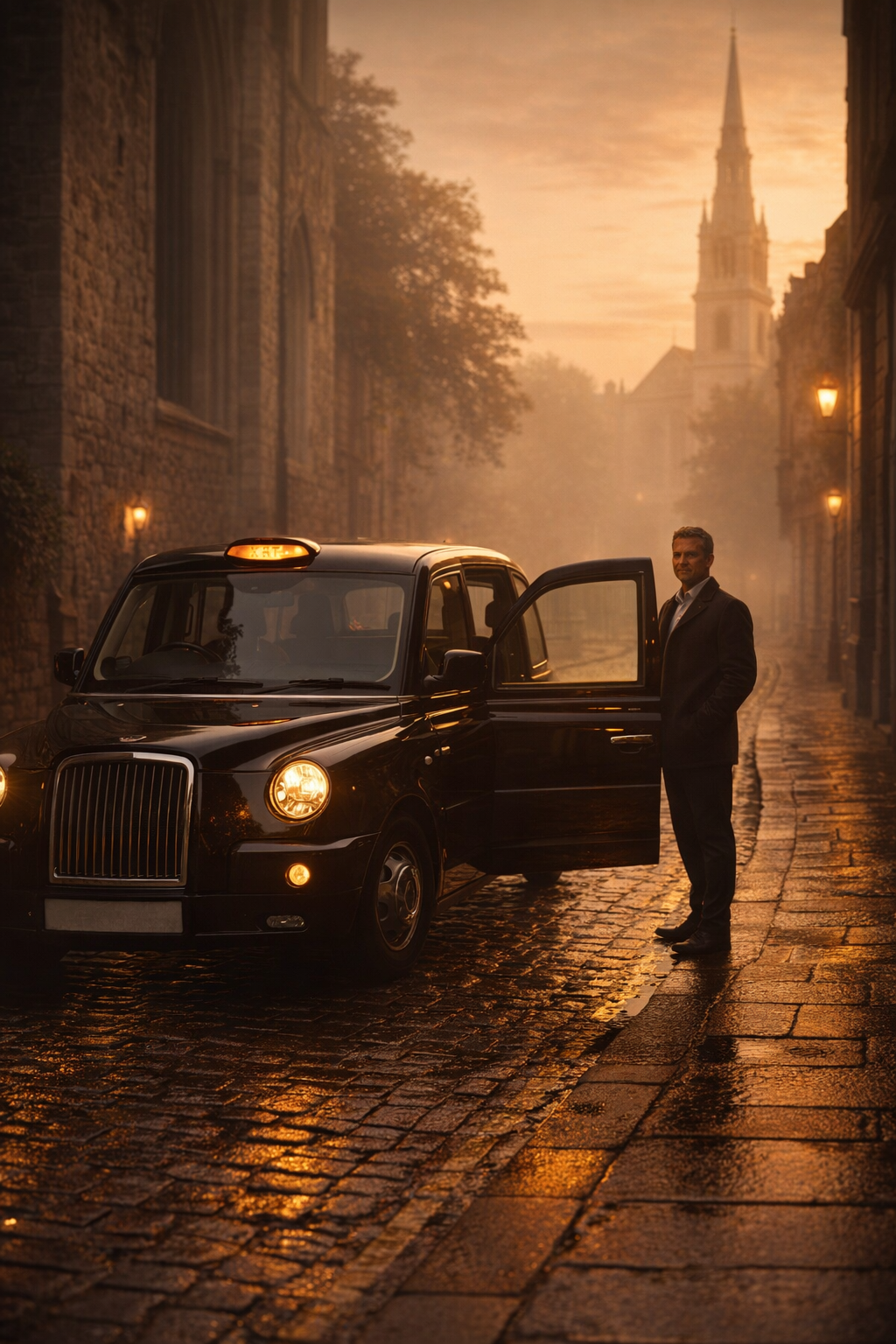
Navigating the City's historical footprint on foot often involves a grueling four kilometer trek, frequently exposed to unpredictable British weather. Large tour buses face different limitations; they are physically barred from entering the narrow, ancient lanes where the most significant remnants reside. A black cab offers a sophisticated alternative for a Roman and medieval London history tour, combining the granular reach of a walking tour with the climate controlled efficiency of a private vehicle.
Our Arrive and Explore service is particularly effective for international travelers. We can collect you directly from the airport and begin your London History Tour immediately, utilizing the hours before your hotel check-in time. Your luggage remains secure in the boot while you discover the City's foundations.
The experience is entirely bespoke. If you choose to spend more time examining the subterranean masonry at the Guildhall Roman Amphitheatre and less at the Tower of London, your driver adjusts the itinerary instantly. This flexibility ensures that the tour moves at your pace, focusing on the specific archaeological layers that interest you most.
Exploring the remnants of Londinium and the medieval structures that followed reveals a city built on layers of resilience and innovation. While many of these landmarks are hidden in plain sight, uncovering their true stories requires a bit of insider knowledge. If you want expert help navigating these historic streets while relaxing in a classic taxi, joining a London History Tour is an excellent way to deepen your understanding. We can handle the navigation and the storytelling, leaving you free to simply soak in the atmosphere of the past.