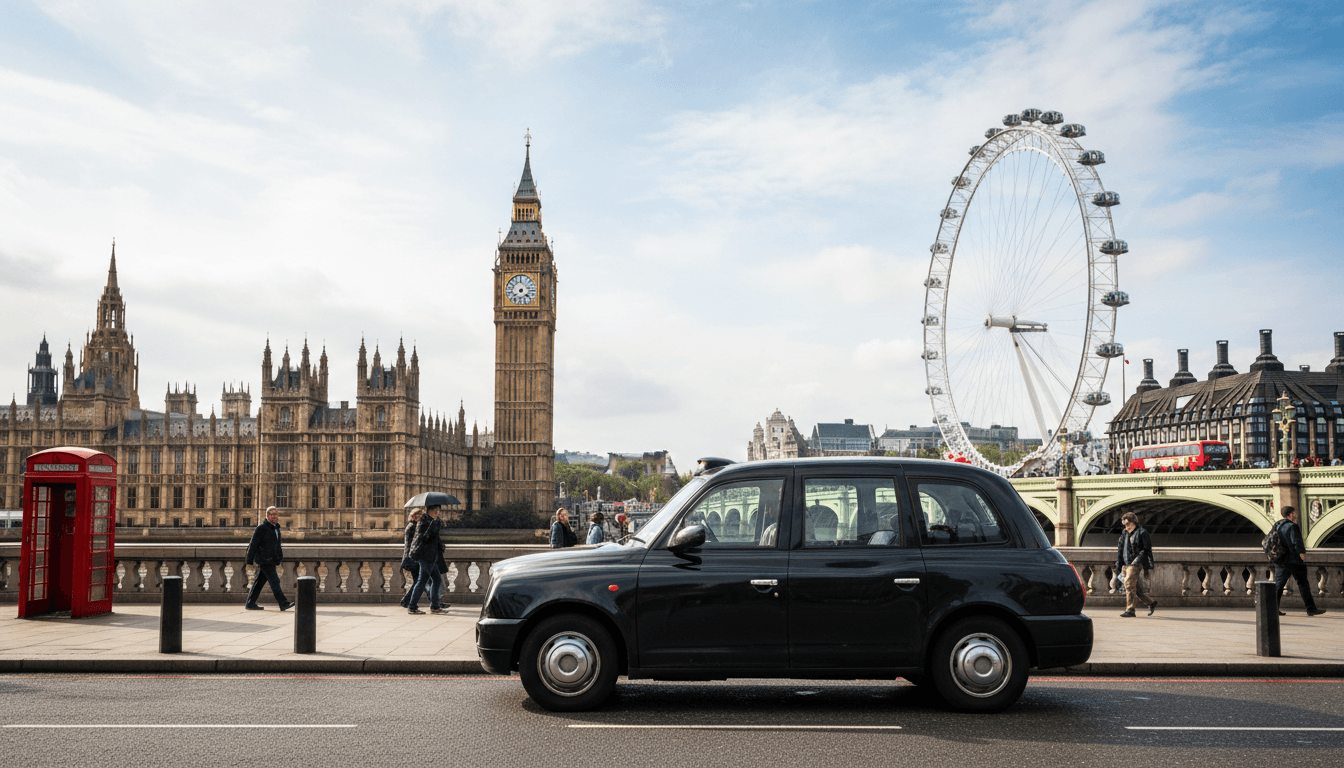
A London architecture old and new black cab tour provides an expert-led journey through the city's evolving skyline, showcasing the striking contrast between historic landmarks like St Paul’s Cathedral and modern skyscrapers like the Shard. This private experience allows visitors to explore centuries of design, from medieval ruins to Brutalist estates, while navigating the streets in an iconic taxi.
Navigating London’s architectural maze on foot often leads to sore feet and missed perspectives; meanwhile, standard bus tours remain tethered to broad, congested main roads. You want to see the City’s evolution without the physical strain or the limitations of a crowded group. A private black cab tour solves this dilemma by offering an intimate, expert guided journey through narrow alleys and grand avenues alike. In this guide, we explore how the iconic taxi serves as the ultimate mobile viewing platform for the capital’s changing face. You will discover everything from the medieval roots of the square mile and the Baroque elegance of Christopher Wren to the bold lines of Brutalism and the soaring glass of the modern skyline. We highlight the specific spots where centuries collide, providing a practical roadmap for your next architectural adventure.
Why a Black Cab is the Ultimate Way to Witness London Architecture
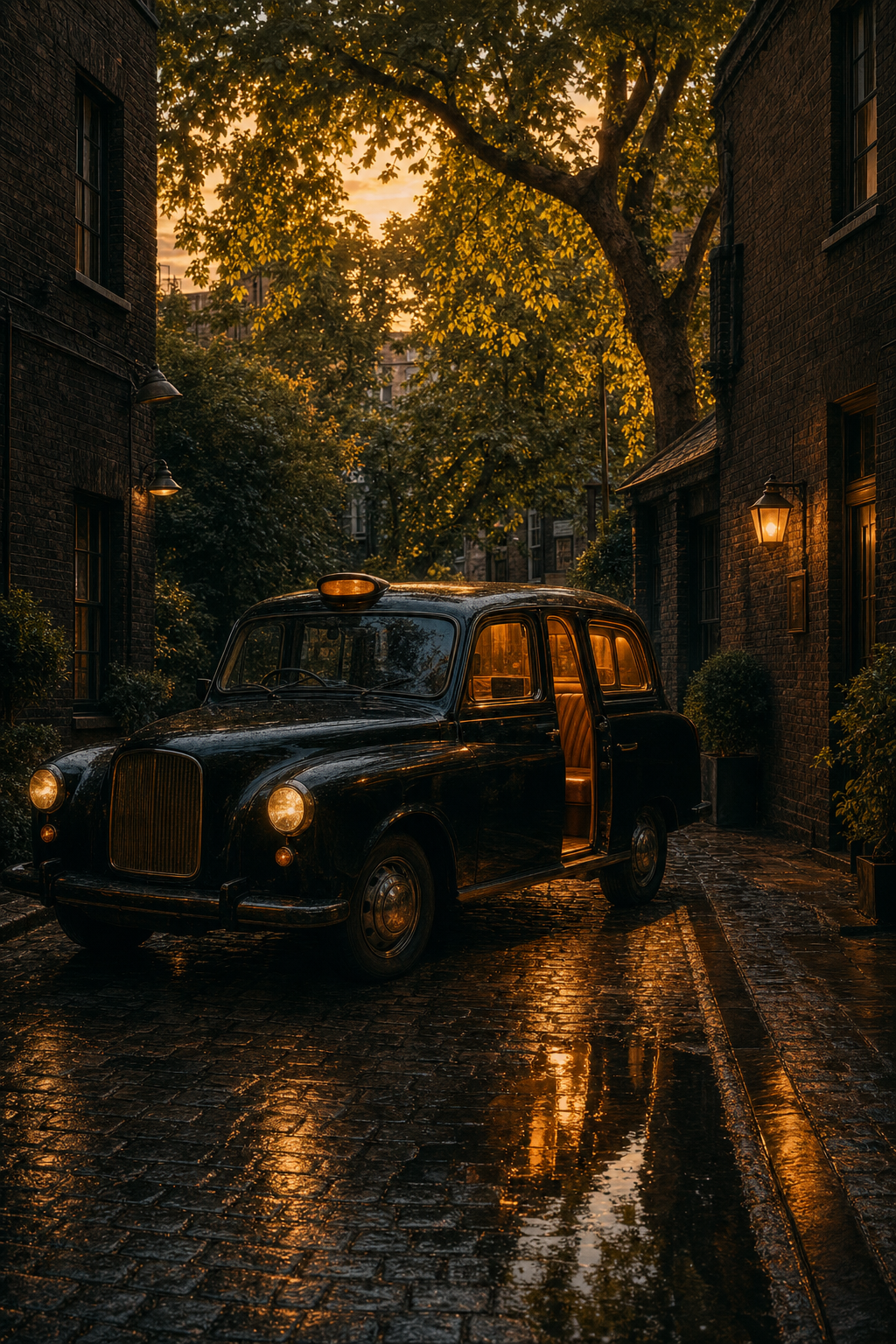
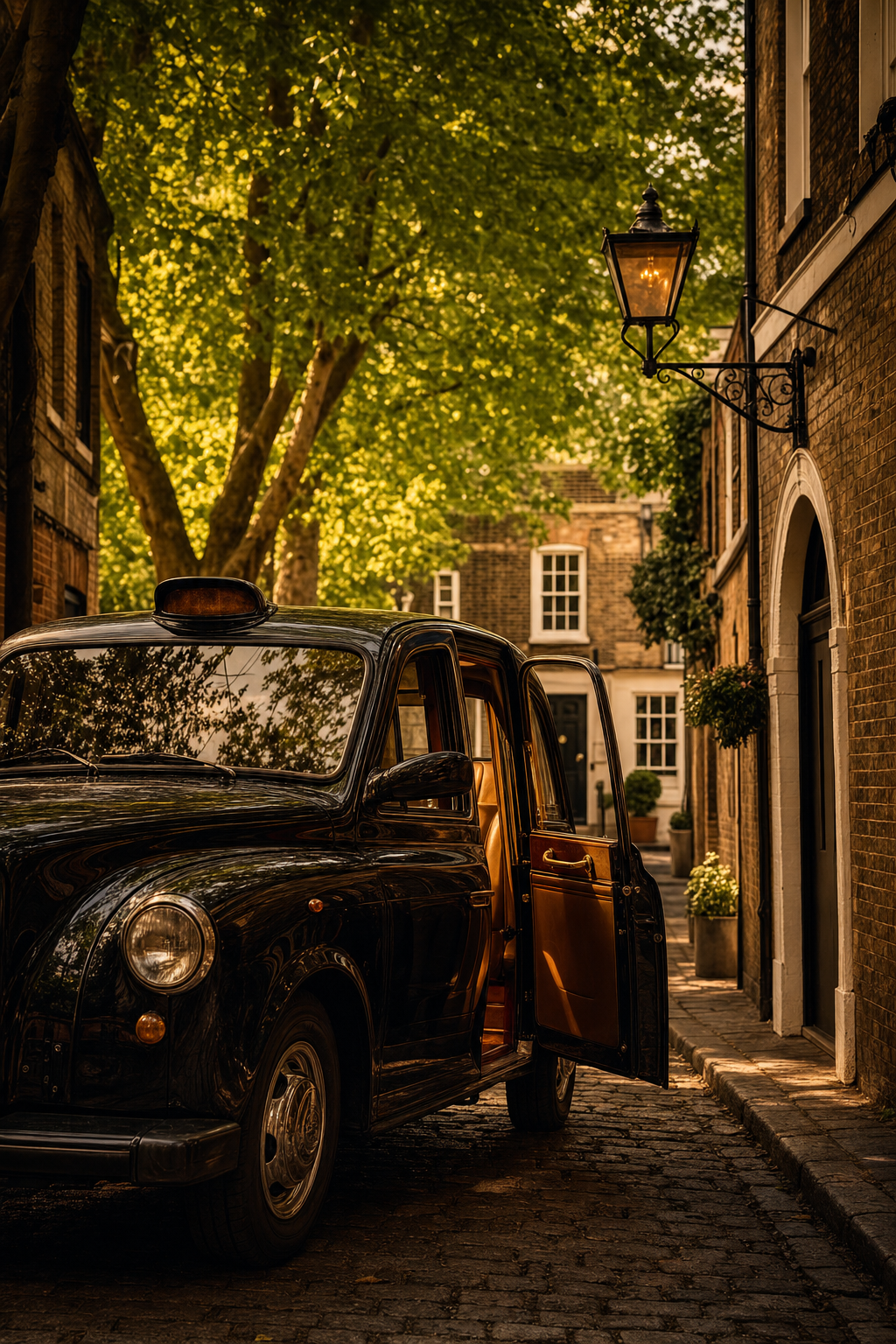
Navigating the capital to appreciate the full scope of a London architecture old and new black cab tour offers advantages that walking or public transport cannot match. The physical design of a traditional black cab is uniquely suited for sightseeing. Its elevated seating provides a superior vantage point, allowing passengers to look above the typical line of traffic and focus on the intricate details of a Victorian frieze or the gleaming apex of a modern skyscraper.
Unlike rigid bus routes, a private cab can stop at precise angles, giving photographers the perfect window to frame the juxtaposition of glass and stone. This flexibility is essential for those wishing to visit distant landmarks, such as the Shard in Southwark and the Gothic spires of Westminster, within a single morning. This efficiency is particularly valuable for travelers choosing airport pickups with guided tours, as it maximizes their time before hotel check-ins by turning a transfer into an immersive experience.
The true distinction, however, lies in "The Knowledge." Every licensed driver has spent years memorizing the city's labyrinthine streets, ensuring they can navigate through narrow alleys and avoid congestion that would stall a standard tour. This expertise transforms a simple journey into one of our customizable history tours. While a walking tour is limited by distance and a bus by its set path, a black cab provides a tailored experience, moving seamlessly between the medieval foundations of the City and the high-tech designs of the East End. The driver does not just follow a map; they understand the architectural evolution of the landscape they traverse daily.
The Medieval and Tudor Foundations: Where London Began
To understand the layers of the city, one must begin in the Square Mile, where the Roman Londinium wall still dictates the flow of traffic. A London architecture old and new black cab tour is uniquely suited for this exploration; while modern development surrounds these ancient sites, the footprint of the streets remains stubbornly medieval. This architectural heritage is not always found in the grandest palaces but in the tight corners and narrow lanes that a black cab can navigate with precision.
The Tower of London serves as the primary anchor for this era. Built by William the Conqueror in the 1070s, the White Tower’s Caen stone construction was designed to dominate the skyline and intimidate the local populace. From the cab window, your driver can point out the contrast between the fortress’s defensive masonry and the later, more decorative Tudor additions. Nearby, fragments of the Roman Wall, some nearly 2,000 years old, stand in quiet corners of Tower Hill and Cooper’s Row. These are easily missed on foot but are staple stops on our customizable history tours.
Navigating the labyrinthine lanes like Bow Lane or Watling Street reveals how the city’s texture changed after the Great Fire of 1666. Before the fire, London was a city of timber and overhanging jetties. After the disaster, new building regulations mandated brick and stone to prevent further conflagrations. The Guildhall remains one of the most impressive survivors of the earlier period. Its Great Hall, dating back to 1411, has survived both the Great Fire and the Blitz, standing as a testament to medieval civic pride.
In these restricted passages, the black cab’s tight turning circle allows access to hidden gems such as St. Bartholomew the Great in Smithfield. Founded in 1123, its heavy Norman arches offer a stark contrast to the glass towers of nearby Farringdon. Seeing these foundations from a cab allows you to trace the city’s physical growth from a walled Roman outpost to a Tudor powerhouse.
The Wren Revolution and Baroque Elegance
The Great Fire of 1666 provided Sir Christopher Wren with a blank slate to reimagine the capital. His primary tool for this reconstruction was Portland stone, a white limestone from Dorset that gave the city a luminous, unified quality. For over 300 years, the London silhouette was defined by Wren’s forest of white spires, anchored by the magnificent dome of St. Paul’s Cathedral. Viewing the cathedral from the rear seat of a black cab allows for a unique perspective of its Baroque proportions, particularly as you approach from Fleet Street where the dome slowly emerges from the urban density.
While St. Paul’s is the centerpiece, the true mastery of this era is found in the fifty-one parish churches Wren designed to replace those lost in the flames. These Christopher Wren churches are now often hidden between modern glass office blocks; they are gems that are easily missed by larger tour buses. A London architecture old and new black cab tour can navigate the tight corners of the City to find St. Stephen Walbrook, which features a prototype dome that influenced the design of St. Paul’s, or St. Mary-le-Bow with its ornate, tiered steeple.
Our customizable history tours allow you to dictate the focus of your journey. If you have a particular interest in the English Baroque, your driver can curate an itinerary that prioritizes these Portland stone masterpieces. For those maximizing their time, our airport pickups with guided tours can include a dedicated loop through the City’s ecclesiastical history immediately after you land, offering a sophisticated introduction to the architecture that defined London for three centuries.
Old Meets New: 5 Famous Views Where Centuries Collide
While Christopher Wren’s steeples once dominated the sky, the modern City is defined by an aggressive verticality that creates startling visual dialogues with the past. A London architecture old and new black cab tour allows you to witness these collisions from a unique perspective, where the cab’s wide windows frame the tension between historic stone and modern glass. Unlike a pedestrian who must crane their neck from the sidewalk, a passenger in a cab can appreciate the parallax effect as these buildings shift positions relative to one another during the drive.
The Shard and St George the Martyr: As your driver navigates Borough High Street, the 18th-century spire of St George the Martyr, a site with roots dating back to 1122, is framed against the 309-meter glass pyramid of the Shard. From the rear seat, the contrast between the weather-worn brick and the sharp, reflective glazing of Western Europe’s tallest building is immediate.
The ‘Can of Ham’ and St Helen’s Bishopsgate: In the financial district, the curved, semi-elliptical form of 70 St Mary Axe, nicknamed the ‘Can of Ham,’ looms over the 13th-century St Helen’s Bishopsgate. This medieval survivor, which remarkably escaped the Great Fire, sits in the literal shadow of 21st-century steel engineering.
The Gherkin and Leadenhall Market: Your cab can pause near Gracechurch Street to view the Victorian wrought iron and glass of Leadenhall Market, completed in 1881, set against the neo-futuristic silhouette of the Gherkin. The ornate maroon and gold of the market’s facade offers a rich texture that heightens the Gherkin’s sleek, aerodynamic curves.
The ‘Walkie Talkie’ and St Margaret Pattens: At 20 Fenchurch Street, the top-heavy ‘Walkie Talkie’ building hangs over the street, dwarfing the delicate spire of St Margaret Pattens, one of the notable Christopher Wren churches. This view perfectly illustrates the shift from ecclesiastical dominance to commercial scale.
The Queen’s House and Canary Wharf: If your customizable history tours take you toward Greenwich, the view from the North Gate is unparalleled. Inigo Jones’s Queen’s House, finished in 1635, provides a white, symmetrical classical foreground to the dense, glittering cluster of Canary Wharf’s skyscrapers across the Thames.
This visual layering provides an excellent introduction for those choosing airport pickups with guided tours, as it offers a condensed history of London’s physical expansion in a single glance from the comfort of the vehicle.
Brutalist Icons: Concrete Masterpieces of the 20th Century

Moving from the shimmering glass of the financial district toward the stark, sculptural forms of mid-twentieth-century modernism reveals a different facet of the city’s evolution. Brutalism, a term derived from the French béton brut or raw concrete, represents a period when architects sought to create monumental, honest structures for post-war Britain. While these buildings were often polarizing at their inception, they have since become some of London’s most protected and prestigious Grade II listed treasures.
The Barbican Estate stands as the pinnacle of this movement. Built on a site decimated by the Blitz, it is a vast, self-contained complex of residential towers, terraces, and cultural spaces. For those on foot, the Barbican is notoriously difficult to navigate due to its multi-level pedestrian walkways and hidden entrances. However, a London architecture old and new black cab tour offers a significant logistical advantage. Your driver can efficiently circle the complex perimeter, stopping at key vantage points along Silk Street or the high-rise views from Beech Street tunnel, allowing you to appreciate the bush-hammered concrete textures without the confusion of the interior maze.
On the South Bank, the Royal National Theatre serves as another essential stop. Designed by Denys Lasdun, its interlocking terraces were famously described as an urban landscape in their own right, meant to mirror the geological strata of a cliffside. These sites are frequently requested as part of our customizable history tours. For passengers arriving on international flights, incorporating these concrete masterpieces into airport pickups with guided tours provides a striking visual contrast to the more traditional landmarks of central London, illustrating the city's resilience and capacity for radical reinvention.
The Modern Skyline: Skyscrapers and High Tech Design
The transition from the solid mass of Brutalist concrete to the skeletal transparency of high-tech architecture is most visible in the City of London’s eastern cluster. A London architecture old and new black cab tour offers the most practical way to navigate these dense financial corridors while observing the 1986 Lloyds Building. Designed by Richard Rogers, this pioneer of high-tech design famously places its services, including steel ductwork and glass elevators, on the exterior to maximize internal space. It remains a rare example of a modern building receiving a Grade I listing.
Moving deeper into the skyline, the Leadenhall Building, or 'The Cheesegrater,' demonstrates how modern engineering respects heritage; its distinctive 10 degree wedge shape was specifically designed to preserve sightlines of St. Paul’s and other Christopher Wren churches. Our customizable history tours often highlight these complex planning nuances that dictated the city's vertical growth. Nearby, 20 Fenchurch Street, known as the 'Walkie Talkie,' represents the shift toward sustainable 'green' architecture with its top-heavy design and public Sky Garden. For travelers utilizing airport pickups with guided tours, witnessing these glass and steel giants emerge on the horizon provides a definitive signal of arrival in a global capital that continues to redefine its silhouette.
London’s architectural landscape is a stunning tapestry where Roman ruins sit beside glass skyscrapers. Exploring these streets by black cab offers a unique perspective on how the city has evolved through the centuries. If you want expert help navigating these layers of history, you can read more about our approach and our passion for storytelling. We are here to ensure your journey through time is both comfortable and deeply informative, helping you discover the hidden gems that define London.